
Custom Search
Hip Flexor Exercise (Leg & Muscle Stretch) One of the major benefits of Stretching is that it increases your flexibility. While Stretching may appear a bit bland as compared with resistance exercises such as Training with Free Weights and Weight Training Exercises, without some good hip flexor stretches, you will not be able to minimize the risk of injury. 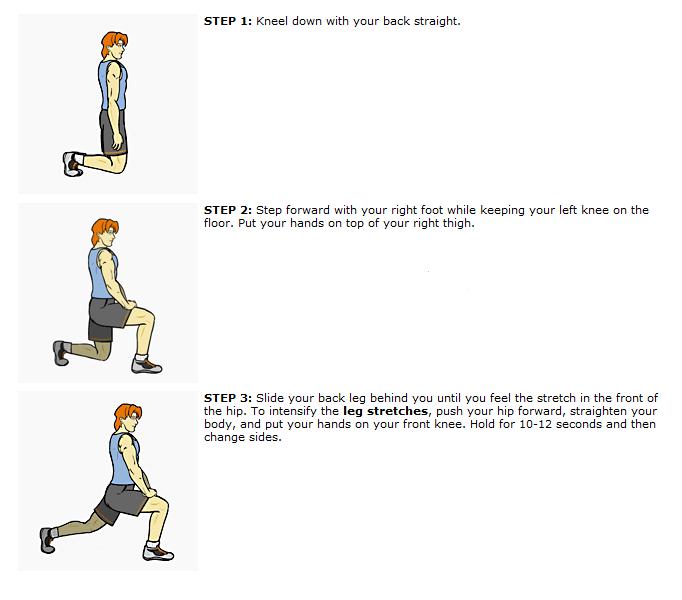 Glute Stretch One of the major benefits of Stretching is that it increases your flexibility. While Stretching may appear a bit bland as compared with resistance exercises such as Training with Free Weights and Weight Training Exercises, without a good stretch, you will not be able to minimize the risk of injury. 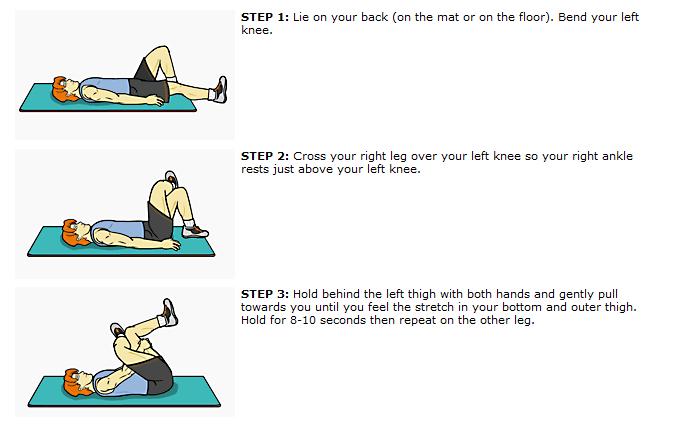 Prone Hamstring Stretch (Leg Stretch) One of the major benefits of Stretching is that it increases your flexibility. While Stretching may appear a bit bland as compared with resistance exercises such as Training with Free Weights and Weight Training Exercises, without a good stretch, you will not be able to minimize the risk of injury. 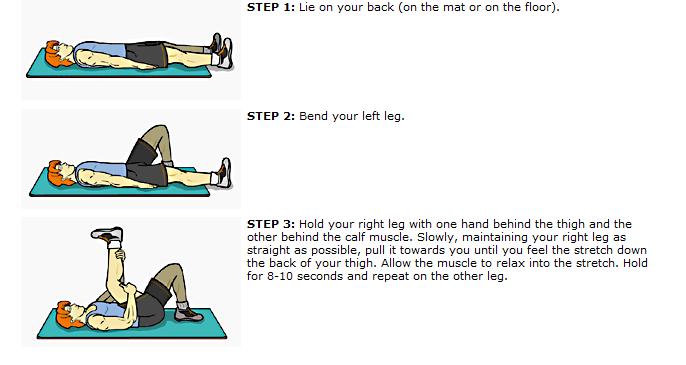 Standing Hamstring Stretch (Leg Stretch) One of the major benefits of Stretching is that it increases your flexibility. While Stretching may appear a bit bland as compared with resistance exercises such as Training with Free Weights and Weight Training Exercises, without a good stretch, you will not be able to minimize the risk of injury. 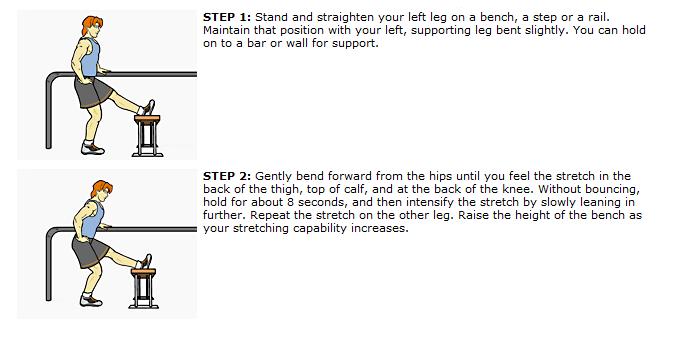 Lunges | Training with Your Own Body WeightThe Lunge tones the legs and can give you wonderfully toned inner thighs and buttocks. But you should never do this Fitness Exercise if you have knee problems. The Lunge strengthens several muscles: your hamstrings, gluteals, and quadriceps.When doing this exercise, make sure to keep your back straight, your torso upright, and your abdominals tight. Don’t lean forward. Let your knee pass forward your big toe in the middle position.
Rear Leg Lifts (Training with Your Own Body Weight)
Squats (Training with Your Own Body Weight)Squat, similar with Lunges, is a great all-around exercise for the legs. This Fitness exercise is a tried-and-tested lower body exercise for anyone without knee problems. Squats focus on your hamstrings and gluteals, and also target your abdominal muscles and lower back since they are used for balance.The Squats come in many variations. Learn the basic type of Squats in this section:
Triceps Dips (Training with Your Own Body Weight)As the name suggests, the Triceps Dips target the triceps brachii muscles, commonly known as the triceps. These are the muscles that run on the backside of your upper arm from your shoulder to your elbow. They constitute two-thirds of your upper arm. These muscles straighten your elbows and allow you to push your arms forward.To prepare your muscles and reduce the risk of injury, make sure to do some warm-up exercises before doing Triceps Dips, or any type of exercise for that matter. Learn how to do the basic Triceps Dips in this section:
|


